Materializing Monsters

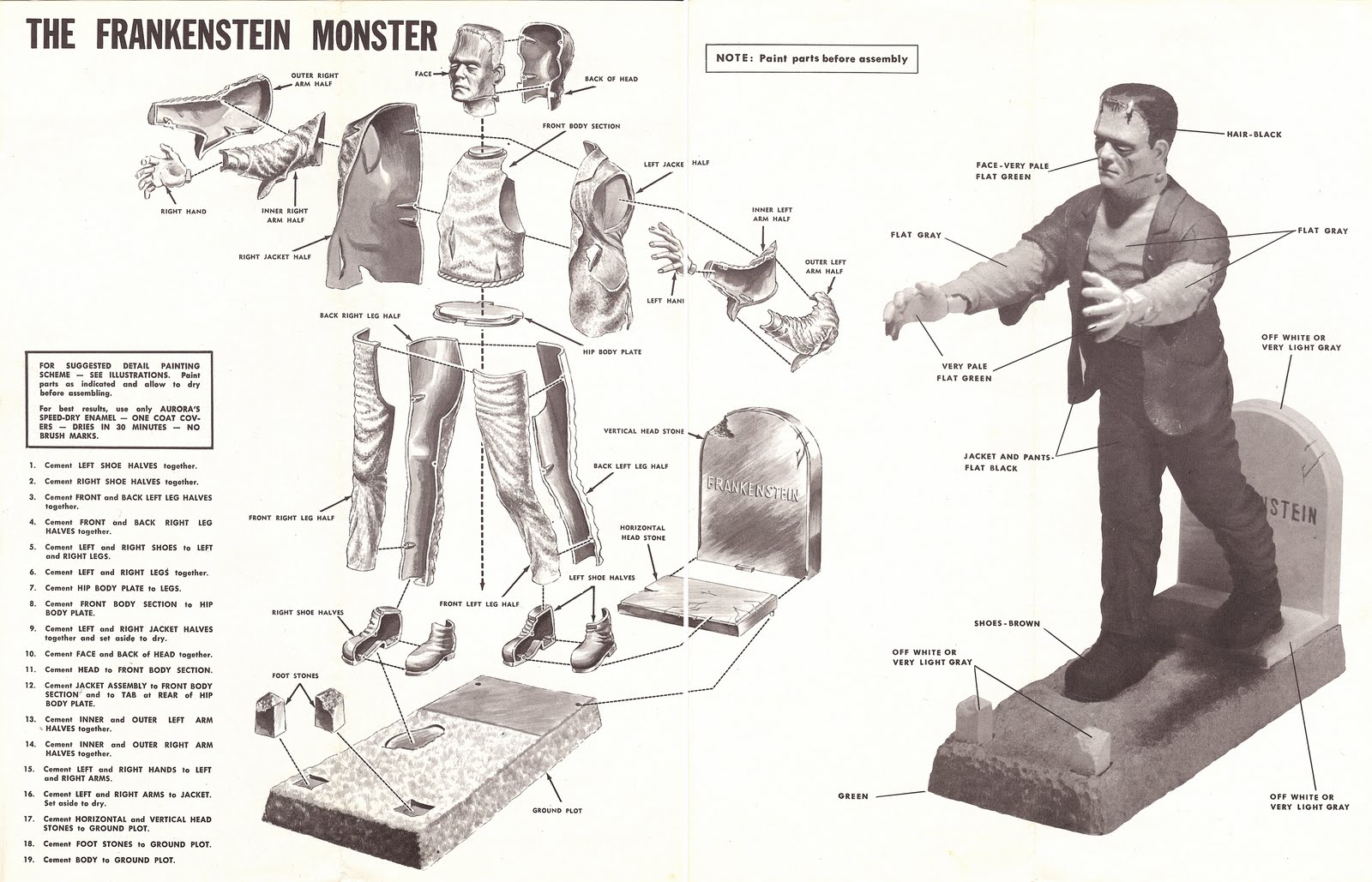
About a year ago, I began to experiment with using this blog as a space for sketching out research projects and writing rough drafts. One of my first efforts in this direction was an essay on Famous Monsters of Filmland and Aurora model kits, which grew out of a panel I attended at the 2010 SCMS conference in Los Angeles. The panel’s organizer, Matt Yockey, was generous enough to invite me on board a themed issue he was putting together looking at FM and its editor, Forrest J Ackerman; the rudiments of the resulting essay can be found in this series of posts.

Revised and expanded, this material formed the basis of a faculty lecture I gave at Swarthmore in January, entitled “Materializing Monsters: Fan Objects and Fantastic Media.” While the talk and associated essay stand on their own, I plan to turn them into a chapter in my next book project, Object Practices: The Material Life of Media Fictions, which looks at the role of material artifacts in the production and circulation of fantastic media. (My other blog posts on this subject can be found here.)

Here’s a link to a news feature on my talk, including audio of the lecture and the PowerPoint slides that accompanied it. I invite you to check it out and comment!

Jason Mittell’s Complex TV

Passing along this word from my friend Jason Mittell, Associate Professor of American Studies and Film and Media Culture at Middlebury College, whose exciting new publication project is now available for open access and “peer-to-peer review.” He is inviting feedback on the pre-published chapters of Complex TV: The Poetics of Contemporary Television Storytelling at http://mediacommons.futureofthebook.org/mcpress/complextelevision/. He shares this outline of the plan:

The book’s introduction and first chapter are posted now (as of Saturday evening, in conjunction with an SCMS workshop on digital publishing I Skyped in for from Germany). I plan on posting chapters every week or two over the next few months, serializing the release to allow time for people to read and comment (and me to finish writing). I hope that momentum will build and the conversation will flourish through this process, but this is obviously an experiment. I hope you can stop in and read the work in progress and offer feedback, and also help spread the word to others who might be interested in the topic. I would also love to hear any feedback about this unorthodox mode of publication and review.

Jason blogs at Just TV.

TWC: special issue on fan/remix video

Thrilled to spread word of this new issue, co-edited by two friends and featuring an interview by an old pal from IU, Brett Boessen! A call for my own guest-edited issue, on materiality and object-oriented fandom, can be found here.

Transformative Works and Cultures Vol 9 (2012)

“Fan/Remix Video,” special issue of TWC guest edited by Francesca Coppa, Muhlenberg College, and Julie Levin Russo, Brown University

Table of Contents

Editorial
“Fan/remix video (a remix)” by  Julie Levin Russo and Francesca Coppa


Theory
“Mashup as temporal amalgam: Time, taste, and textuality,” by Paul J. Booth
“Toward an ecology of vidding,” by Tisha Turk and Joshua Johnson
“The rhetoric of remix,” by Virginia Kuhn
“Remix video and the crisis of the humanities,” by Kim Middleton


Praxis
“Vidding and the perversity of critical pleasure: Sex, violence, and voyeurism in ‘Closer’ and ‘On the Prowl,’”by Sarah Fiona Winters
“Spreading the cult body on YouTube: A case study of ‘Telephone’ derivative videos,” by Agnese Vellar
“Fake and fan film trailers as incarnations of audience anticipation and desire,” by Kathleen Amy Williams


Symposium
“The two-source illusion: How vidding practices changed Jonathan McIntosh’s political remix videos,” by Martin Leduc
“Abridged series and fandom remix culture,” by Zephra Doerr
“The Star Wars franchise, fan edits, and Lucasfilm,” by Forrest Phillips


Interview
“Documenting the vidders: A conversation with Bradcpu,” by Counteragent
“Interview with Eric Faden and Nina Paley,” by Brett Boessen
“Desiree D’Alessandro and Diran Lyons bear arms: Weapons of mass transformation,” by Desiree D’Alessandro and Diran Lyons


Multimedia
“Fred rant,” by Alexandra Juhasz
“Queer video remix and LGBTQ online communities,” by Elisa Kreisinger
“Genesis of the digital anime music video scene, 1990–2001,” by Ian Roberts
“A history of subversive remix video before YouTube: Thirty political video mashups made between World War II and 2005″, by Jonathan McIntosh


Review
“Television and new media: Must-click TV,” by Jennifer Gillan, reviewed by Lindsay Giggey


Talk: The Biology of Virtual Creatures

The Biology of Virtual Creatures: Unconventional Applications of a Science Education in Hollywood Special Effects

Thursday, March 15, 2012 at 8:00 p.m.

Science Center 199, Swarthmore Campus

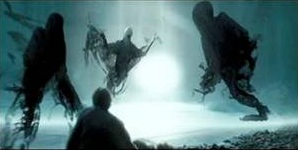
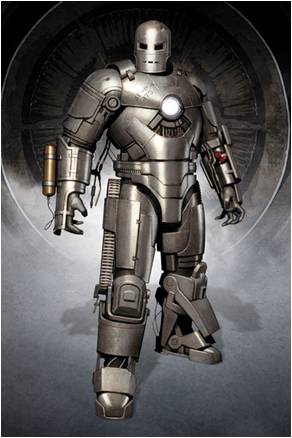
From Chester the Cheetah to swarming Dementors to the Iron Man Mark-I suit, Bradley Gabe’s (’94) computer graphics skills have been honed by experiences working on high-end digital effects in commercial and feature film productions at Quiet Man, Industrial Light & Magic, Stan Winston Studio, and Janimation.

As an active member of the CG community, Bradley has advanced technical approaches to CG production through consulting, teaching courses, leading seminars, and conducting Master Classes at Siggraph and other venues. In 2009 he was honored by his industry peers with an Autodesk Masters award.

Fan studies network

Passing along this exciting announcement …

We are pleased to announce the formation of The Fan Studies Network.

Open to scholars at all levels, the FSN is concerned with bringing together those interested in all aspects of fandom, in order to engage in discussions and make connections.

We welcome scholars to join the network by signing up to our Jiscmail mailing list: FanStudies@jiscmail.ac.uk.

You can also visit our website, which features CFPs and events of interest at http://fanstudies.wordpress.com, and our Twitter account @FanStudies.

We look forward to making connections with new members: please circulate this message to anyone you think might be interested.

All the best,

Lucy Bennett and Tom Phillips

The Fan Studies Network

http://fanstudies.wordpress.com

@FanStudies

FSN Team:
Lucy Bennett
Tom Phillips
Bethan Jones
Richard McCulloch
Rebecca Williams

CFP: Materiality and Object-Oriented Fandom (March 2014)

I’m excited to be guest-editing a special issue of Transformative Works and Cultures on objects and artifacts in media fandom! The CfP follows.

Alongside its consumption and transformation of texts, media fandom has always been marked by its consumption and transformation of objects. From superhero figures, model kits, and wargaming miniatures for sale at hobby shops, to costumes and props worn at Comic-Con, material objects and body decoration have functioned as displays of textual affiliation, crafting skills, or collecting prowess, reflecting a long history of fan-created and -circulated artifacts around popular media fictions. While “mimetic” and “affirmational” practices seek to replicate the objects of fantastic media as faithfully as possible, other fan creations result in material mash-ups, expressing transformative impulses in artifact form. Regardless of orientation, object-oriented fandom represents a distinct strand within old and new activities and cultures, one whose intimate and often friendly relationship with corporate branding and ancillary market exploitation make it of central interest to an emerging body of scholarship on transmedia, convergence, and the franchise.

This special issue seeks historically and theoretically informed essays that explore the role of objects and their associated practices in fandom, as instances of creativity and consumerism, transformation and affirmation, private archive and public display. We are particularly interested in work that complicates or transcends the binaries of social vs. solitary, artwork vs. commodity, and gift vs. monetary economies to engage with object-oriented fandom as self-aware and playful in its own right.

We welcome submissions dealing with, but not limited to, the following topics:

  • creating and collecting, buying and selling fan artifacts (production artifacts, memorabilia, reference materials, models, material fan art, and fan crafts…)
  • cosplay (creating costumes and other artifacts, performing cosplay, competitions…)
  • fan enactments, events, and embodiment (Renaissance Fairs, Quidditch competitions, re-enactments, fannish tattoos…)
  • fan objects as paratext and transmedia extension
  • dissemination of skills and abilities (workshops, online blogs, fan meetings…)
  • object marketplaces (con, comic-book store, ebay, etsy…)
  • evaluation and valuation of artifacts across the various economies of fandom
  • impact of digital technologies (including social networking and 3D printing) on object creation, collecting, and cataloging
  • new debates over authorship, ownership, and control

Submission guidelines

TWC accommodates academic articles of varying scope as well as other forms that embrace the technical possibilities of the Web and test the limits of the genre of academic writing. Contributors are encouraged to include embedded links, images, and videos in their articles, or to propose submissions in alternative formats that might comprise interviews, collaborations, or video/multimedia works. We are also seeking reviews of relevant books, events, courses, platforms, or projects.

Theory: Often interdisciplinary essays with a conceptual focus and a theoretical frame that offer expansive interventions in the field. Blind peer review. Length: 5,000–8,000 words plus a 100–250-word abstract.

Praxis: Analyses of particular cases that may apply a specific theory or framework to an artifact; explicate fan practice or formations; or perform a detailed reading of a text. Blind peer review. Length: 4,000–7,000 words plus a 100–250-word abstract.

Symposium: Short pieces that provide insight into current developments and debates. Non-blind editorial review. Length: 1,500–2,500 words.

Submissions are accepted online only. Please visit TWC’s Web site (http://journal.transformativeworks.org/) for complete submission guidelines, or e-mail the TWC Editor (editor AT transformativeworks.org).

Contact

We encourage potential contributors to contact the guest editors with inquiries or proposals: Bob Rehak (rehak.twc AT gmail.com)

Due dates

Contributions for blind peer review (Theory and Praxis essays) are due by March 1, 2013.

Contributions that undergo editorial review (Symposium, Interview, Review) are due by April 1, 2013.

In Media Res: Special Effects

Somewhere around the introduction of Google+, I developed an allergy to self-promotion, and withdrew my parasocial feelers from Facebook as well as the nascent G+. I mean to cast no aspersions on the active users of those sites; my going dark, or at least dimmed, on the social-networking front stems not from disapproval but from simple overload. I’m returning to teaching from a year of sabbatical, and I’m a new father to boot, making for happy but exhausting times. I could be better about taking the raw material of my life (and the slightly more refined material of my professional activities) and plugging it into a live data feed, but my curmudgeonly suspicion that the public affordances of new media, so often presented to us as opportunities for self-expression and collective knowledge-building, are simply labor under the sexy sign of the digital — the conscripted misrecognized as the voluntary — stays my hand.

All that said, though, I do have news: this week I am co-organizing a set of pieces on special effects at In Media Res, the MediaCommons project devoted to showcasing short audiovisual “exhibits” accompanied by learned commentary. This week’s posts, by Kimberly Ramirez, Drew Ayers, Chuck Tryon, and Dan North, come out of a larger project, an anthology entitled Special Effects: New Histories, Theories, Contexts, co-edited by me, Dan North, and Michael S. Duffy.

You can read more about that project and the week’s curations in our introductory essay, located here.


New Works in Fan Studies

It’s always nice to see friends doing well, and in the case of Kristina Busse, there’s an added reward — seeing her name in print always means that something new and interesting is being said in the world of fan studies. In this case, it’s a double-header: the latest issue of Transformative Works and Cultures, the online journal Nina edits with Karen Hellekson, is up; and there’s a special section of the new Cinema Journal entitled “Fandom and Feminism: Gender and the Politics of Fan Production.” Both are well worth checking out, but I’m particularly excited about the CJ piece, which collects a number of writers I count myself lucky to know — among them Julie Levin Russo, Louisa Stein, and Alexis Lothian — and focuses a critical lens on exciting areas of creative practice in new media. Tables of contents are quoted below. Well done, Nina, and keep up the great work!

Transformative Works and Cultures, Vol 3 (2009)

Editorial

Extending transformation HTML
TWC Editor

Theory

The labor of creativity: Women’s work, quilting, and the uncommodified life ABSTRACT HTML
Debora J Halbert
Sex detectives: “Law & Order: SVU”‘s fans, critics, and characters investigate lesbian desire ABSTRACT HTML
Julie Levin Russo
On productivity and game fandom ABSTRACT HTML
Hanna Wirman

Praxis

Sites of participation: Wiki fandom and the case of Lostpedia ABSTRACT HTML
Jason Mittell
Identity and authenticity in the filk community ABSTRACT HTML
Melissa L. Tatum
The Web planet: How the changing Internet divided “Doctor Who” fan fiction writers ABSTRACT HTML
Leora Hadas

Symposium

The magic of television: Thinking through magical realism in recent TV HTML
Lynne Joyrich
The future of academic writing? HTML
Avi Santo
Repackaging fan culture: The regifting economy of ancillary content models HTML
Suzanne Scott
Snogs of innocence, snogs of experience HTML
Dana Shilling
Playing [with] multiple roles: Readers, authors, and characters in
Who Is Blaise Zabini?”
HTML
Anne Collins Smith
“A Jedi like my father before me”: Social identity and the New York Comic Con HTML
Jen Gunnels
The Hunt for Gollum: Tracking issues of fandom cultures HTML
Robin Anne Reid
Pattern recognition: A dialogue on racism in fan communities HTML
TWC Editor

Interview

Interview with Verb Noire HTML
K. Tempest Bradford
Interview with Mark Smith and Denise Paolucci HTML
zvi LikesTV
Interview with Chris Bouchard HTML
Emma Dollard

Review

“Camgirls: Celebrity and community in the age of social networks,” by Theresa M. Senft HTML
Adriano Barone
“Introduction to Japanese horror film,” by Colette Balmain HTML
Alessia Alfieroni
“Pride and prejudice and zombies: The classic Regency romance?Now with ultraviolent zombie mayhem!,” by Jane Austen and Seth Grahame-Smith HTML
Craig B. Jacobsen

Cinema Journal 48.4 (Summer 2009)

A Fannish Taxonomy of Hotness – Francesca Coppa

A Fannish Field of Value: Online Fan Gift Culture – Karen Hellekson

Should Fan Fiction Be Free? – Abigail De Kosnik

User-Penetrated Content: Fan Video in the Age of Convergence – Julie Levin Russo

Living in a Den of Thieves: Fan Video and Digital Challenges to Ownership – Alexis Lothian

Conspiracy in the Classroom

Finishing the first week of a new school term always leaves me feeling as though I’ve launched some kind of ship — like I’ve broken a bottle of bubbly against the side of a vessel that then rolls proudly out of drydock. (Not that I’ve ever performed this particular action in real life. Like so many of my mental referents, it’s a composite of media memories: scenes from movies like Titanic, or the wonderful, ballsy opening shots of Star Trek: Generations, in which a champagne bottle tumbles through space to smash across the prow of the Enterprise-B.)

In this case, we’re talking two inaugural voyages: the first, a retooled version of my Animation and Cinema class, and the second, an entirely new course called Conspiracy. I’ll detail the Animation rethink in a future post, but for now, I want to share the Conspiracy syllabus, which I’m pretty proud of. Putting it together was a pleasurable summer’s labor: I watched dozens of movies, read reams of articles, and basically dug deep into the viny undergrowth of suspicion and speculation that anchors the U.S. political system (or at least our collective perceptions of it). The original inspiration for the class was simply my love of The Parallax View (Alan J. Pakula, 1974), which seemed marvelously strange and icily labyrinthine when I first watched it in the early 1980s. It, along with Phil Kaufman’s remake of Invasion of the Body Snatchers (1978), Peter Hyams’s burnt-sienna cheese platter Capricorn One (1978), and Sydney Pollack’s 1975 film Three Days of the Condor (which has not aged well, sad to say) still exerts a special hold on my imagination, and I’m thrilled at the opportunity to explore it and other texts with a class of talented students.

What’s odd, of course, is that what once seemed in the fantastic sweep of its paranoia to be a close cousin of science fiction — indeed, in movies like Capricorn One and Coma (1978), the generic boundaries dissolve almost entirely — today comes across as naive, obvious, or both. Conspiracy narratives in the 1970s were like hushed whispers of a truth too terrible to dredge into daylight, yet too destructive to ignore; now our ears are deafened by the angry bellows of right-wing pundits, angry town-hall protesters, and certain Republican party leaders who believe our President is a socialist, that health-care reform involves the instigation of death panels, and that vaccinations cause disease. Those who aren’t actively enraged are cynically passive: why fight the system when it’s already become, Matrix-like, the fabric of everyday life? As with another topic I teach, fandom, the cultural polarities of conspiracy seem to have reversed themselves over recent decades: subculture becoming superculture, margin becoming mainstream. And if fandom is by and large about the production of pleasure within convection currents that link fringe and center, then conspiracy, following similar fluid dynamics, generates a darker miasma of dread and distrust.

The syllabus that follows is built around two topoi: the assassination of John F. Kennedy anchors the first half of the semester, the events of 9/11 the second. I’ve tried to address all the major permutations of conspiracy theory in the United States, including supernatural and feminist variations, yet I know there’s much more we could be looking at (and I welcome any suggestions for tweaking the lineup). The fun part has been coming up with a reading list that mixes “authoritative” academic perspectives with raw, disreputable textual troublemakers from the heart of conspiracy country. One of my hopes is that the course will take us from a time when conspiracy seemed an isolatable, nameable, unusual thing to one in which the digital remapping of media culture has multiplied the theories, speculation, and accusation to an unnerving din. Another hope is that students will ultimately come to think self-reflexively about their own practices of textual production and legitimation, and by implication the larger politics of a college education: their place in a system that turns economic capital into cultural capital. And maybe, by the end of the term, this small shared plot, this classroom conspiracy (it tickles me to note that conspire literally means to breathe togetheran apt description of our biweekly meetings) will yield, for them and for me, some major insights.

———————————————————————-

FMST 43: Conspiracy – Fall 2009

This course investigates the texts, narratives, and cultures of conspiracy as they are constituted in film, television, digital, and print media. We will concentrate less on the “truth” of any given conspiracy than on its popular and public impact and meaning — what it says, or might be saying, about ourselves, our world, and our times. The subject, then, is both conspiracy theory and theories about conspiracy. As this is a Film and Media Studies course, we will also pay attention to factors such as representation, technology, narrative, audience, and industry, and their relationship to both dominant and resistant ideologies.

Our focus is on the half-century dating from the late 1950s to the present, a period that extends from the Red Scare, the assassination of John F. Kennedy, and the Apollo moon landings to Waco, 9/11, and contemporary controversies about Barack Obama’s citizenship and an all-encompassing New World Order. Confining ourselves to the United States, we will explore the ways in which public perceptions of conspiracies spread and evolve through media practices both inside and outside the mainstream, as a mode of education, entertainment, and political activity. Areas we will explore (moving from specific to general) include:

  • The tropes, recurring patterns, and characteristic forms of conspiracy
  • The role of different media in shaping perceptions and understandings of conspiracies
  • The relationship of conspiracy narratives/theories to other media modes such as journalism and documentary, and genres such as horror, science fiction, and mystery
  • The light shed by conspiracy narratives on the production and legitimization of knowledge
  • The possibilities and limits of “diagnosing” conspiratorial trends in relation to specific historical and cultural moments
  • Conspiracy theory as an element of democratic discourse, grassroots political movements, and ideological critique

Textbooks & Readings

  • The Rough Guide to Conspiracy Theories. James McConnachie and Robin Tudge. Rough Guides Reference, 2008.
  • Conspiracy Theories: Secrecy and Power in American Culture. Mark Fenster. Revised and Updated Edition. Minneapolis: University of Minnesota Press, 2008.
  • Additional readings marked [PDF] will be distributed via Blackboard.

Assignments

15% –Participation: assessed throughout term; for more, see note below.

25% –Activity on class blog: will be assessed three times during term for frequency and content of contributions. For more, see blogging handout.

25% –Midterm paper: due October 8, this 5-7 page paper will respond to the first half of the term by locating a pattern, theme, or idea that ties together a group of conspiracy materials (visual, written, or other). These texts should include both academic and nonacademic content we have looked at together in class, along with material you have explored on your own. In addition to identifying and defining a unifying element, the paper must make some kind of interpretive argument about its significance.

35% –Conspiracy wall display and reflection paper: due the penultimate week of class, this project represents the culmination of your experiences in and thinking about Conspiracy. Working in teams, you will create a public display at McCabe Library, a “conspiracy wall” of texts and images mapping out an existing conspiracy or one of your own design. You will also turn in a 3-5 page reflection paper that discusses the conspiracy and the presentation you have given it. Further details will be given later in term.

A Note on Materials and Methods

In this course we will explore a range of content from different points on the cultural spectrum, from academic articles to photocopied screeds and angry websites, from Hollywood blockbusters to digitally-shot and -distributed underground video. Navigating this material will mean paying attention to origins and rhetorical stance (i.e. where it’s from and what it’s saying) while simultaneously setting aside too-quick distinctions between true/false, logical/illogical, legitimate/illegitimate. While I don’t want to lose sight of “common sense,” I also don’t want the course to devolve into arguments about who really shot JFK. Our assumption will be that we can dabble in conspiracies and conspiracy theories without buying into them — or their counterarguments.

CALENDAR

Week 1 (Sept 1-3): Course Introduction; Types of Knowledge

Read for Thursday: Fenster, “Introduction: We’re All Conspiracy Theorists Now”; Birchall, “Know It All” [PDF], Lisker, “The MADE Manifesto” [PDF]

Screen: Conspiracy Theory (Richard Donner, 1997)

Week 2 (Sept 8-10): Reading and Paranoia

Read for Tuesday: Shapiro, “Paranoid Style”; for Thursday, Fenster Ch 4, “Uncovering the Plot” (pp. 100-117)

Screen: The Game (David Fincher, 1997)

Week 3 (Sept 15-17): Red Scares and Pod People

Read for Tuesday: Fenster, Ch 1 “Theorizing Conspiracy Politics,” Hofstadter, “The Paranoid Style in American Politics” [PDF]; for Thursday, Steffen-Fluhr, “Women and the Inner Game of Don Siegel’s Invasion of the Body Snatchers“?[PDF]

Screen: Invasion of the Body Snatchers (Don Siegel, 1956)

Week 4 (Sept 22-24): JFK

Read for Tuesday: Marcus, excerpts from “The Manchurian Candidate“?[PDF]; for Thursday, Fenster Ch 4 “Uncovering the Plot” pp. 118-142, Simon, “The Zapruder Film” and “JFK” [PDF]; Hidell, “The Center of the Labyrinth” [PDF]

Screen: JFK (Oliver Stone, 1991). Watch on own time before Tuesday’s class: The Manchurian Candidate (John Frankenheimer, 1962).

Week 5 (Sept 29-Oct 1): The Seventies

Read for Tuesday: Kael, “Invasion of the Body Snatchers” [PDF]; for Thursday, Simon, “The Parallax View” [PDF], “Project Mind Kontrol” [PDF]; Hidell, “Who Killed John Lennon?” [PDF]

Screen: The Parallax View (Alan J. Pakula, 1974). Watch on own time before Tuesday’s class: Invasion of the Body Snatchers (Philip Kaufman, 1978)

Week 6 (Oct 6-8): Feminism and Other Science Fictions

Read: Tiptree, “The Women Men Don’t See” [PDF], Valerius, “Rosemary’s Baby, Gothic Pregnancy, and Fetal Subjects” [PDF]; Hidell, “Is There a Satanic Child Abuse Cover-Up?” [PDF]

Screen: Rosemary’s Baby (Roman Polanski, 1968). Watch on own time before Tuesday’s class: The Stepford Wives (Bryan Forbes, 1975)

Due: Midterm paper

Fall Break

Week 7 (Oct 20-22): Space Invaders I

Read: Fenster Ch 5, “Plotting the Rush”; Bara, “The Secret History of NASA” [PDF]

Screen: Excerpt from Capricorn One (Peter Hyams, 1978), A Funny Thing Happened on the Way to the Moon (Bart Sibrel, 2001), Astronauts Gone Wild (Bart Sibrel, 2004). Watch on own time: Mythbusters, “NASA Moon Landing Hoax”

Week 8 (Oct 27-29): Space Invaders II

Read: Fenster Ch 4, “Uncovering the Plot” pp. 143-end; Graham, “Are You Now or Have You Ever Been? Conspiracy Theory and The X-Files” [PDF]; Bell and Bennion-Nixon, “The Popular Culture of Conspiracy/The Conspiracy of Popular Culture” [PDF]

Screen: Episodes of The X-Files TBA; Conspiracy, “Area 51″

Week 9 (Nov 3-5): Politics and Race in the Digital Era

Read: Fenster Ch 3, “Finding the Plot” (review material on Clinton); Knight, “Fear of a Black Planet: ‘Black Paranoia’ and the Aesthetics of Conspiracy” [PDF]

Screen: The Clinton Chronicles (Patrick Matrisciana, 1994); watch on own time The Obama Deception (Alex Jones, 2009)

Week 10 (Nov 10-12): New World Orders

Read: Fenster Ch 2, “When the Senator Met the Commander”; Heimbichner, “The Idiot’s Guide to the Cryptocracy” [PDF]; Weidner, “The Culling: A Speculative Look into the Global Apocalypse” [PDF]; Weston, “FEMA: Fascist Entity Manipulating America” [PDF]

Screen: Endgame: Blueprint for Global Enslavement (Alex Jones, 2007); watch on own time Waco: The Rules of Engagement (William Gazecki, 1997)

Week 11 (Nov 17-19): 9/11

Read: Fenster Ch 7 “A Failure of Imagination”; Helms, “Lingering Questions about 9/11″ [PDF]; Meigs, “Afterword: The Conspiracy Industry” [PDF]

Screen: Loose Change (Dylan Avery, 2007); watch on own time before Tuesday’s class: United 93 (Paul Greengrass, 2006)

Week 12 (Nov 24): Looking Forward to the End of the World

Read: Fenster Ch 6, “The Prophetic Plot”; Marrs, “What Will Happen in 2012?” [PDF]; Wallace, “Four Horses of the Apocalypse: A Color-Coded Key to the Cryptocracy” [PDF]

Screen: TBA

Thursday (Nov 26): Thanksgiving Break

Week 13 (Dec 1-3): Encoding/Decoding History

Screen: The Da Vinci Code (Ron Howard, 2006), National Treasure (Jon Turtletaub, 2004)

Due: Conspiracy Wall displays and reflection papers

Week 14 (Dec 8): Last day of class

Student evaluations

Where I’ve Been

Although I frequently share with students my airy notions about online communities being organic things like bonsai trees, growing in unexpected directions but shaped by our collective attentions, I’ve never felt the aptness of the metaphor quite as pointedly as I do today, coming back to Graphic Engine after a long — make that extremely long — absence. It feels rather like unlocking the door to a musty-smelling office that I haven’t visited for months, only to find some poor dead shrub, abandoned and dessicated in its pot.

Fortunately, I’ve always had a green thumb (lie: I’ve always just poured a bunch of water on the zombie plant and hoped it would spasm back to life like Mary Elizabeth Mastrantonio’s character in the single most grating scene of The Abyss), so I’m hoping my handful of loyal readers will forgive the lengthy silence. Such things are acceptable, I know, in the fitful, idiosyncratic world of blogging, but only when the blogger takes the time to communicate up front that he or she will be taking a few weeks (or in my case, months) off. I didn’t do that, preferring the guilt-free but rather callous path of Lee Iacocca’s “never complain, never explain.” In any case, no disrespect or disregard intended toward those lovely souls who have read and commented on this blog in the past. I hope I haven’t lost you forever.

So what was up? Well, I meant to take a breather after my string of posts counting down the series finale of Battlestar Galactica. (You can follow the archive link, or simply look below.) But then Star Trek happened. I found it hard — indeed, impossible — to write about the J. J. Abrams reboot, for reasons that I’m still sorting through. (I plan to be done with the sorting, and actually post something, by the time the 30th anniversary of Star Trek: The Motion Picture rolls around on December 7 — or maybe as soon as November 17, when the Blu-Ray hits.) Not that I didn’t like the movie; it would take a truly puppy-stomping disposition to dislike it. But its release unexpectedly marked the death of some part of me, and in monitoring the shift in my heart of Star Trek from a living, vital pleasure to a glass-encased museum piece, I got a bit lost in myself. It led to a summer’s worth of soul-searching about certain things, among them my publishing priorities, and while I worked on myriad other projects, nothing quite made it to the blog stage.

But never mind: it’s September 1, the start of a new month and of a new school term, and my goal for today — before I run off to the first screening of my Animation and Cinema class — is to put in at least a token appearance and assure the world that I’m not dead, abducted, or overtaken by Luddism. In between the work-cracks of the summer, I got in a lot of reading and viewing, and there are lots of things I plan to write about in future posts (chief among them, District 9 and the Avatar trailer). I promise to get to them soon, and I apologize for having stretched your patience. Here’s hoping the bonsai tree still has some green in it.